
Sierra Blanca, Marbella Golden Mile €16,900,000
Meet La Concha, Marbella’s iconic mountain, and discover its natural beauty, fascinating facts and summit walk.
· 4 min. read
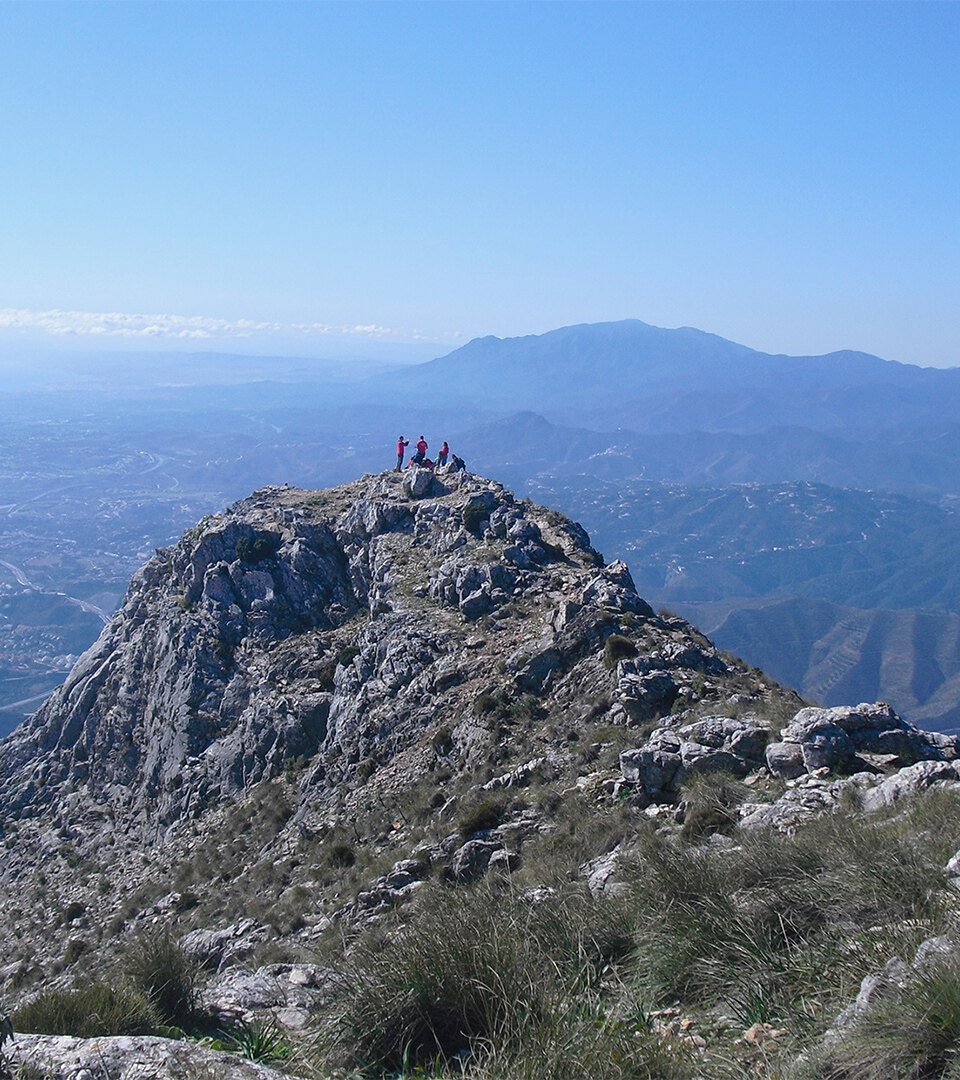
On the rare days when low cloud settles over Marbella, something feels missing. The sea is still there, the palm trees stand exactly where they should, and lunch on the terrace remains an excellent idea. Yet with La Concha hidden from view, Marbella loses a surprising amount of its appeal. The skyline looks unfinished.
Then the cloud lifts, that familiar silhouette reappears, and everything falls back into place. La Concha gives Marbella its sense of drama: a rugged mountain rising dramatically behind a coastline associated with sunshine, gardens and easy living. Its pale ridges catch the morning light, deepen into shadow during the afternoon and often glow pink as the sun goes down.

From the promenade, Puerto Banús or the fairways of Nueva Andalucía, the mountain draws the eye inland. A sea view may be the first thing visitors ask for, but spend a little time here and you understand the pleasure of looking the other way. La Concha becomes part of how you recognise home.
La Concha means “the shell” in Spanish, an appropriate name for its distinctive outline. It marks the western end of the Sierra Blanca ridge and is one of the most recognisable natural landmarks along this stretch of the Costa del Sol.
The summit stands 1,215 metres above sea level, approximately 3,986 feet. Sierra Blanca’s highest point is actually Cerro del Lastonar, which the Junta de Andalucía lists at 1,279 metres. Another familiar summit, Cruz de Juanar, reaches 1,184 metres. The Junta also traces pilgrimages from Marbella to Cruz de Juanar back to the mid-eighteenth century, reflecting a longstanding local connection with these mountains.

Part of Andalucía’s Betic mountain system, Sierra Blanca owes its name, “white mountain range”, to its predominantly pale marble. These metamorphic rocks help explain the striking contrast between its exposed ridges and the darker vegetation below.
The Sierra Blanca Special Area of Conservation covers 6,547.74 hectares, approximately 65.5 square kilometres, across Marbella, Ojén, Istán and Monda. It belongs to the European Natura 2000 network. Its carbonate rocks also hold an important aquifer, storing groundwater used for water supply and irrigation.
The protected area is also included in the Intercontinental Mediterranean Biosphere Reserve, recognised by UNESCO in 2006, linking important natural landscapes in southern Spain and northern Morocco.
Wildlife includes Spanish ibex, roe deer and genets. The range also shelters pockets of pinsapo, the Spanish fir associated with Andalucía’s mountain forests.

The nearby viewpoints, Mirador del Corzo and Mirador del Macho Montés, offer different perspectives over Ojén and the coast. The latter is marked by a sculpture of an ibex, celebrating one of the range’s characteristic animals.
The views from the upper mountain explain its enduring attraction. Marbella and the Mediterranean spread out to the south, while the reservoir near Istán appears inland. When visibility allows, Gibraltar and the North African coastline emerge in the distance. The familiar holiday landscape suddenly becomes part of a much larger geography.


La Concha’s contribution to Marbella extends beyond the view. Sierra Blanca rises immediately behind the coastal area, providing shelter from northerly winds. Marbella’s municipal tourism office identifies this mountain barrier, together with the configuration of the coast, as a key influence on the town’s celebrated microclimate.
The same official source reports an average annual temperature of around 18.5°C, approximately 320 days of sunshine, and generally no more than 50 rainy days per year. These are broad descriptions of the local climate, rather than a promise about any particular holiday, but they help explain Marbella’s appeal for outdoor living.

For residents, that appeal is easy to translate into everyday pleasures: breakfast outside in winter, a walk beside the sea after work, or a game of golf without waiting for summer. The mountain is part of the setting that makes such a lifestyle possible.
Weather conditions on La Concha itself can be very different from those at sea level. Cloud can envelop the ridge suddenly, winds strengthen on exposed sections, and winter can even bring snow to the summit. The mountain disappearing into cloud may spoil the view from town; for walkers, it is also a reason to reconsider their plans.
The best-known ascent begins at Refugio de Juanar, near Ojén. Allow roughly five to six hours for a return walk of around 12 kilometres, depending on the route, pace and stops. Woodland and olive groves give way to rocky terrain and increasingly open views.

This is a demanding mountain walk requiring fitness, sure footing and confidence with heights. Exposed passages, including Salto del Lobo and sections fitted with chains, need particular care. Choose a settled day in spring or autumn, avoid the summer heat, and take proper footwear, loads of water, sun protection and an offline route. Check the forecast and access conditions before setting out; a qualified guide is a sensible choice if you lack mountain experience.
Reaching the summit brings a lovely reversal: the mountain you have admired from Marbella becomes the place from which you admire Marbella itself.


Its summit stands 1,215 metres (approximately 3,986 feet) above sea level.
The return route from the Refugio de Juanar is around 12 kilometres; allow five to six hours, depending on pace and stops.
Yes. Exposed rocky sections require fitness, sure footing and confidence with heights. Don’t attempt the walk if you don’t have a good level of fitness.
You can park in the Refugio de Juanar’s car park, or a little further on at the gate, beyond which you can’t take the car.
Yes. You can take a leisurely stroll to the Mirador del Macho Montés which has stunning views over Marbella and the whole coastline. This walk to the mirador takes about 20 minutes from the Refugio de Juanar.
Subscribe to our newsletter for engaging articles, exclusive content, and the latest updates.

A visionary in PR and real estate, shaping Marbella’s success and legacy.