Like what you read?
Subscribe to our newsletter for engaging articles, exclusive content, and the latest updates.
During a live COPE Marbella radio interview Christopher Clover reflects on Marbella’s evolution, property market and future challenges.
· 5 min. read
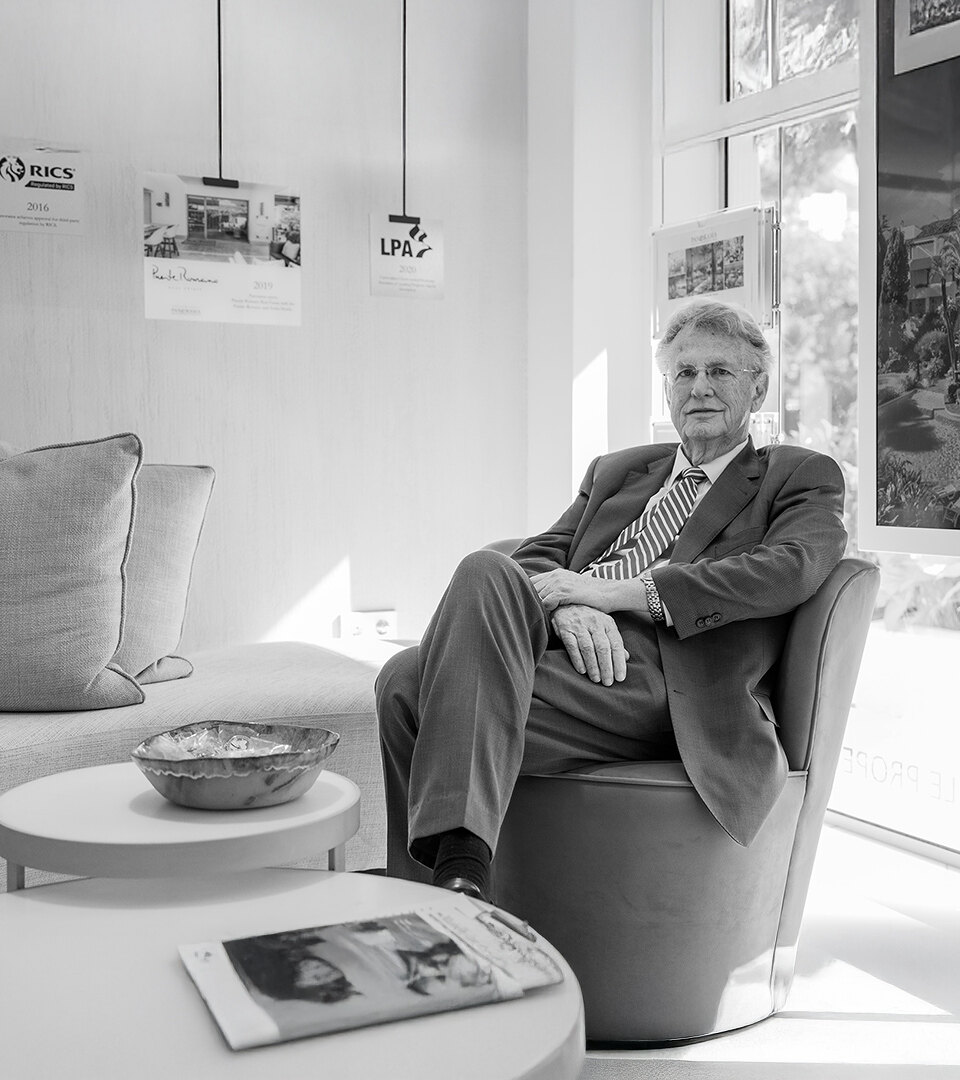
Christopher Clover, Managing Director and Board Chairman of Panorama, recently joined presenter Raquel Tapia for a live broadcast of the 102.2FM COPE radio station La Mañana de la Costa. During the interview, Chris shared his perspective on Marbella’s evolution, its international appeal and the challenges shaping its future.
Drawing on more than five decades of experience in Marbella’s real estate sector, Clover offered listeners a thoughtful overview of how the town has evolved, why demand remains so strong, and what needs to be addressed to sustain Marbella’s success in the years ahead.

Kicking off the conversation, Raquel Tapia reflects on her recent travels around Europe, noting that they only reinforced her belief that Marbella remains one of the very best places in the world to live. The market data released by Panorama Properties, she noted, supports that view, confirming Marbella’s continued strength within the luxury property sector.
Christopher Clover has been personally involved in Marbella’s property market since 1973, with Panorama Properties established in the town for 55 years. Speaking on air, he recalled arriving in a Marbella that was already recognised as a luxury destination, but on a much smaller scale.
In the 1960s, Marbella’s population stood at just 12,000. By 1970, when Panorama began welcoming inspection trips from the United States, that figure had already grown to nearly 29,000. As Clover explained during the interview, that period marked the beginning of Marbella’s transformation into the international destination it is today.
Even then, he believed Marbella possessed unique qualities that would ensure long-term appeal, from climate and lifestyle to safety, hospitality and international character.
“What makes Marbella unique is not just the climate or the lifestyle, but the way people from 152 nationalities live together in harmony.”
A central theme of the radio conversation was Marbella’s transition from a seasonal resort to a genuine twelve-month destination.
Clover explained that by the mid-1990s, Marbella had reached a critical mass of around 100,000 registered residents. This allowed restaurants, hotels and services to remain open throughout the winter months, even if business was quieter.
The decisive change, however, came after the pandemic. As discussed on air, remote working fundamentally altered how people choose where to live. Once work was no longer tied to a specific location, Marbella’s appeal became even more compelling.
If people can work from anywhere in the world, Clover noted, Marbella naturally rises to the top of the list.
“Demand remains strong, particularly from international buyers who see Marbella as a long-term lifestyle choice.”
During the broadcast, Raquel Tapia highlighted several figures from Panorama’s latest market insights, which Chris expanded upon during the interview:
Marbella’s registered population now stands at approximately 172,000 residents, with around one third being foreign nationals. Beyond this, the town supports a significant floating population, particularly during the winter months, estimated at between 50,000 and 75,000 people.
What truly sets Marbella apart, Clover emphasised, is the diversity behind these numbers. Residents from 152 different nationalities live side by side in what he described as a uniquely harmonious international community, something rarely found elsewhere. During the interview, he attributed much of this cohesion to Andalusian hospitality and local values.
“Compared with markets like Dubai or Miami, Marbella remains highly competitive.”
When asked whether Marbella’s market could reach a ceiling, Clover offered a nuanced response that distinguished between different segments of the market.
For permanent residents and local workers, housing availability remains the most serious challenge. The shortage of both sales and rental properties is not unique to Marbella, but it is particularly visible in high-demand areas. Data referenced during the interview shows that housing supply across Spain fell by around 20 percent in the year leading up to June.
Recent legislative changes by the Andalusian government aim to ease this pressure by allowing the development of housing for workers on certain municipal plots. Several projects are already attracting interest, but availability remains a limiting factor for sustainable growth.
“Infrastructure must grow at the same pace as Marbella’s international reputation.”
For the luxury and non-resident market, Clover explained that Marbella still has room to grow. While prices are high, they remain competitive when compared with other global second-home destinations such as Dubai, Miami and leading Mediterranean markets.
During the interview, both Clover and Tapia acknowledged that Marbella now finds itself mentioned alongside these international locations, particularly following recent recognition as a leading global destination.
However, Clover stressed that prestige and popularity must be matched by infrastructure investment if Marbella is to maintain this position.
“With the right investment and cooperation, Marbella can match Europe’s best destinations.”
Mobility and infrastructure were identified during the broadcast as the second major obstacle to Marbella’s continued growth. While progress has been made, Clover was clear that further investment is essential.
He called for a shift in mindset, encouraging ambition over resignation and emphasising the importance of cooperation between local, regional and national authorities, alongside collaboration between the public and private sectors.
Infrastructure, he noted, is ultimately a question of planning, management and funding, and the challenges Marbella faces are solvable.
“After more than five decades here, my confidence in Marbella’s future is stronger than ever.”
Subscribe to our newsletter for engaging articles, exclusive content, and the latest updates.
Closing the interview, Christopher expressed firm optimism about Marbella’s future. After more than five decades observing its evolution first-hand, his confidence is grounded in experience.
Marbella’s success has been built steadily over time, and while challenges remain, its ability to adapt and progress has been proven repeatedly. With the right leadership and long-term vision, Clover believes Marbella can achieve infrastructure standards comparable with Europe’s most established destinations.
For listeners tuning in to La Mañana de la Costa, the message was clear. Marbella’s story is far from finished.
Read Christopher Clover’s Marbella Market Report 2026, for further insight on this topic.

A visionary in PR and real estate, shaping Marbella’s success and legacy.