Like what you read?
Subscribe to our newsletter for engaging articles, exclusive content, and the latest updates.
From private-club glamour on the Golden Mile to destination resorts in Marbella East, a small group of hotels helped define how the city looks, lives and presents itself.
· 9 min. read
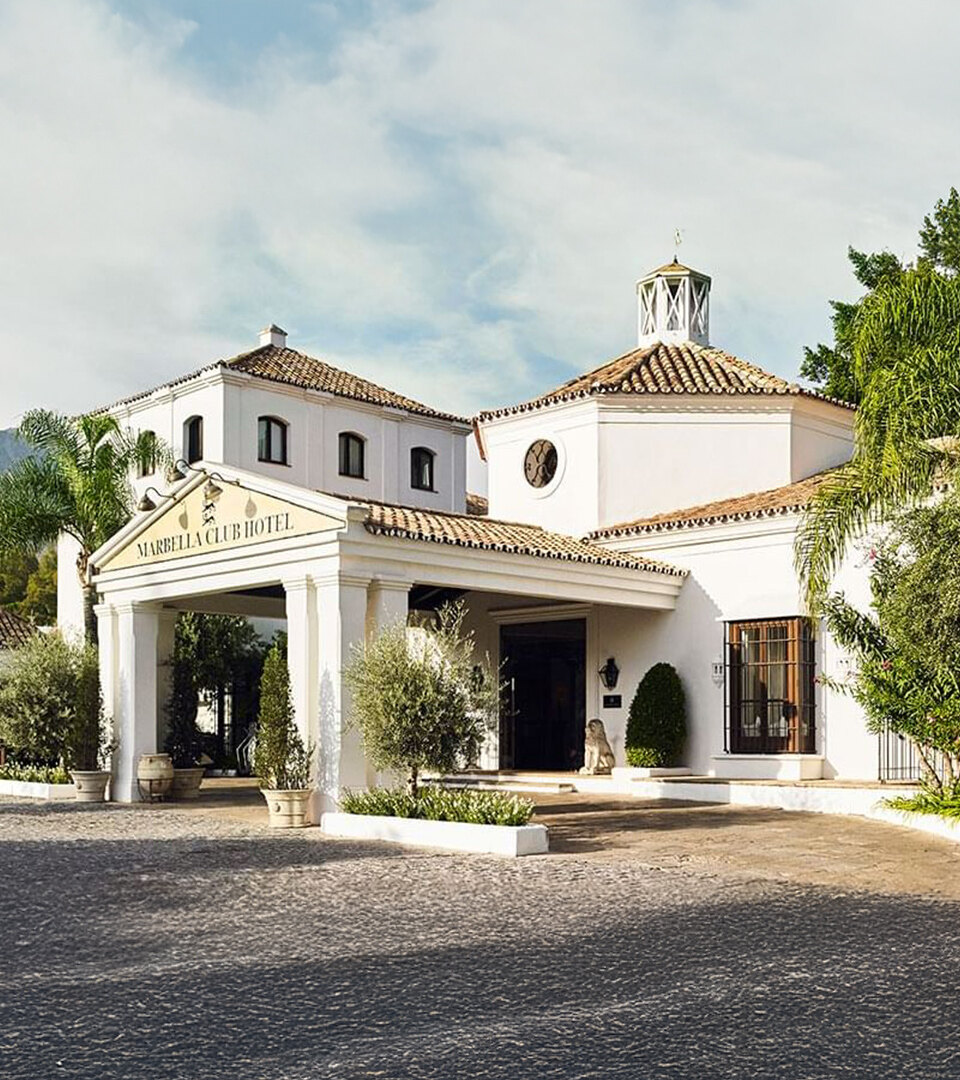
Marbella was not transformed into a luxury destination by its hotels alone. Its climate, coastline, private villas, golf courses, Puerto Banús and the people who chose to settle here all played their part.
However, the landmark hotels in Marbella became important catalysts. They attracted visitors who might otherwise never have discovered the town, introduced new approaches to hospitality, dining and leisure, and gave emerging residential areas a recognisable identity.
Some were intimate and deliberately understated. Others arrived as ambitious beachfront resorts with hundreds of rooms, extensive gardens and sporting facilities. Together, they helped establish several of the characteristics that define Marbella today: privacy without isolation, informal Mediterranean living, strong service and a social life extending far beyond the summer season.
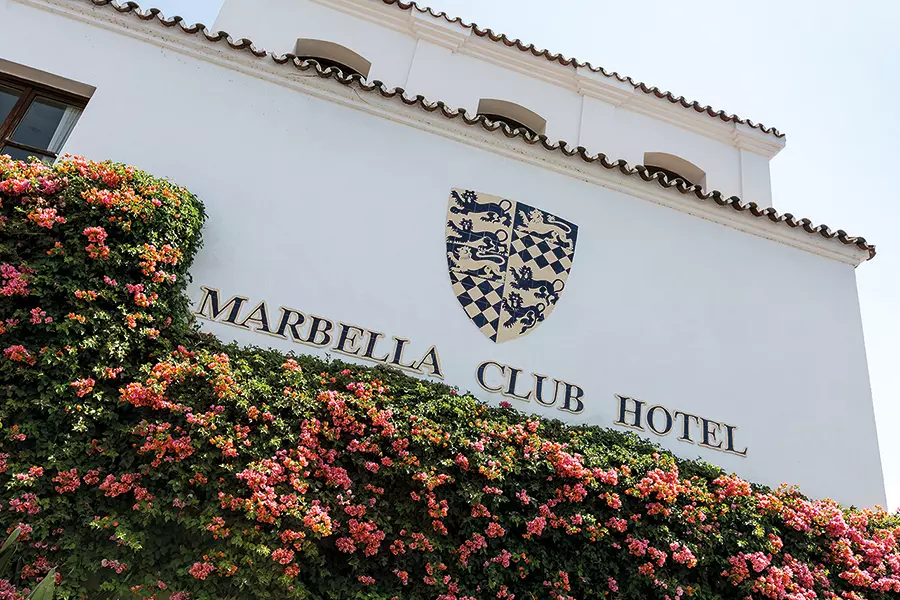
The story begins with the Marbella Club Hotel, which opened in 1954 with 20 bedrooms, a dining room and a bar inside the former Santa Margarita farmhouse.
You can read our complete article about the beginnings of the Marbella Club.
Prince Alfonso von Hohenlohe developed the property from his family’s private Mediterranean retreat, creating something closer in spirit to a sophisticated country house than a conventional grand hotel. Its low-rise buildings, mature gardens and relaxed social atmosphere offered a new interpretation of luxury: personal, informal and closely connected to the landscape.
The hotel attracted members of European society, actors, artists and business figures, but its wider influence was architectural and residential. It demonstrated that Marbella’s most desirable addresses did not need to depend on imposing buildings or urban density. Villas hidden behind trees, garden courtyards, terraces and direct access to the sea became part of the visual language of the Marbella Golden Mile.
The hotel has continued to evolve while protecting that original character. Its expansion into Finca Ana María, including the restoration and extension of its botanical landscape, shows how heritage properties can introduce new experiences without abandoning the qualities that made them distinctive.
You might be interested in: Hotel Puente Romano: perfect beachfront location in Marbella.

Explore beachside properties on Marbella’s Golden Mile, close to Marbella Club Hotel.

Puente Romano Marbella occupies a particularly significant position on the Golden Mile, a short distance from Marbella Club Hotel. Together, the two properties create an unusually concentrated stretch of luxury hospitality, dining, sport and beachfront living, helping to establish this part of Marbella as one of the city’s most recognisable and desirable addresses.
Puente Romano began as a low-rise residential complex designed in the style of an Andalusian village, with whitewashed buildings, tiled roofs, cobbled squares and subtropical gardens. It became a hotel in 1979, creating one of Marbella’s earliest examples of resort accommodation and private residences sharing the same setting.
This village-style layout was central to its identity. Rather than placing every facility within one large building, Puente Romano developed as a series of paths, gardens, squares, restaurants and individual buildings. The result felt closely connected to its surroundings while preserving privacy.
Sport also became a defining part of the resort. The Puente Romano Tennis Club opened in 1979, with Björn Borg presiding over the opening, and was later directed by Manolo Santana. It has since hosted major professional tournaments and helped reinforce Marbella’s reputation as a destination where tennis, padel and an active outdoor lifestyle form part of everyday resort life.
Today, Puente Romano is also one of Marbella’s principal dining and social destinations, with restaurants, bars, wellness facilities and events attracting residents as well as hotel guests throughout the year. It helped develop the modern idea of a Marbella hotel as more than somewhere to stay: a year-round centre for dining, sport, leisure and social life.
Know more about Puente Romano: a Gem on Marbella’s Golden Mile.
The apartments and villas within and around the resort have consequently become some of the most sought-after properties on the Golden Mile. Their appeal comes not only from their beachfront position, but from immediate access to an established resort lifestyle and proximity to both Puente Romano and Marbella Club.

Discover upscale properties for sale in Puente Romano.
El Fuerte opened beside the sea in central Marbella on 4 July 1957. From the beginning, it was marketed to foreign visitors at a time when tourism remained a relatively new part of the local economy. Its position was especially significant: close to the Old Town, the beach and the remains of the historic Fort of San Luis.
Unlike the more secluded resort model emerging west of town, El Fuerte helped establish central Marbella as a place where visitors could combine beach holidays with the life of the existing town. Guests could walk between the promenade, the historic centre, local shops and restaurants rather than remaining inside a self-contained resort.
Its subsequent growth reflected Marbella’s own expansion. The original hotel developed from 45 rooms into a much larger seafront property, undergoing repeated additions and renovations over several decades. In 2023, it reopened as a five-star hotel following a major refurbishment led by interior designer Jaime Beriestain, with redesigned rooms, landscaped terraces, pools overlooking the Mediterranean and a stronger connection between the hotel and its beachfront setting.
Find properties for sale in Marbella Town Centre, within walking distance of the Old Town, promenade and beach.

Subscribe to our newsletter for engaging articles, exclusive content, and the latest updates.
Los Monteros opened in 1962, extending Marbella’s luxury hotel landscape eastwards. It became known not only for its guests and beachfront setting, but also for gastronomy, becoming the first hotel in Spain to receive a Michelin star.
Its importance reaches beyond the hotel itself. The growth of Los Monteros encouraged the development of high-end leisure and sporting infrastructure around it, while the surrounding residential community became known for spacious plots, detached villas, mature gardens and proximity to the beach. The hotel helped give the wider Los Monteros area a name and identity that remains influential in Marbella’s property market.
The property reopened as Kimpton Los Monteros Marbella in February 2025 following an extensive renovation. El Equipo Creativo drew on local materials and design references, including geometric patterns, terracotta and curved forms, while preserving a connection to the hotel’s 1960s heritage.
Its return illustrates an important change in Marbella’s hospitality market. Historic hotels are not simply being replaced by new construction; several are being reworked for a new generation while retaining the recognition accumulated over decades.
View prime properties in Marbella East.

When Don Pepe opened in June 1964, it introduced a different architectural presence to Marbella. With 226 rooms and a prominent seafront structure, it was one of the first large-scale luxury hotels to be constructed in the town. Audrey Hepburn was among Don Pepe’s early celebrity visitors and signed the hotel’s guestbook; decades later, the Audrey Bar was named in her honour.
Its height and location made it immediately recognisable. Positioned between central Marbella and the western stretch of coastline that would become the Golden Mile, the hotel demonstrated that luxury hospitality could be closely connected to the town rather than hidden within a private estate.
Don Pepe became one of Marbella’s most recognisable seafront landmarks. With extensive gardens, pools and direct access to the Paseo Marítimo, it brought resort-style hospitality into the heart of the city, close to shops, restaurants and established residential neighbourhoods.
The hotel is currently undergoing a comprehensive refurbishment backed by an investment of approximately €40 million. Plans include additional suites and a redesigned room configuration intended to give every guest room a sea view. Its renewal is another sign that Marbella’s established hotel names remain valuable assets rather than relics of an earlier tourism era.

Opened in 1969, originally as the Marbella Hilton, Don Carlos introduced large-scale resort hospitality to Elviria. Its tower became a visible marker on Marbella’s eastern coastline, while its extensive gardens, beach access and leisure facilities created a destination that could operate largely within its own grounds.
The hotel’s arrival contributed to the growing profile of Marbella East. Elviria and the neighbouring coastal communities developed around a combination of beaches, golf, established resorts and low-density residential areas, offering an alternative to the Golden Mile and central Marbella.
Don Carlos has now reopened following a major renovation of around €45 million. Updated accommodation, restaurants and wellness facilities have been joined by the Rafa Nadal Tennis Centre, continuing the property’s longstanding association with sport while adapting it to contemporary resort expectations.

The project shows how an established hotel can support the renewed positioning of an entire area. Investment within the resort strengthens local amenities, creates year-round activity and adds visibility to surrounding communities such as Elviria, Hacienda Las Chapas, Marbesa and Cabopino.
Explore homes in Elviria, Marbella East.

The reinvention of El Fuerte, Los Monteros, Don Carlos and Don Pepe suggests that Marbella’s hotel history is still being written. At the same time, new projects are bringing major hospitality brands and further resort investment to the city.
In Marbella East, the planned Four Seasons resort in Río Real is expected to combine a five-star hotel with branded residences, restaurants, wellness facilities and landscaped grounds. Incosol is also expected to return as a specialist five-star health, wellness and longevity hotel, reviving another well-known name from Marbella’s past.
Near Las Chapas, Waldorf Astoria Marbella is scheduled to open in 2029 as part of Higuerón Marbella Golf Resort. Hilton’s plans include 120 hotel rooms and 120 branded residences, reflecting the continued convergence between luxury hospitality and residential development.
Read more about how Marbella East sees a renewed wave of luxury resort investment.
Their influence can still be seen in the areas around them. Hotels create employment and amenities, but the most successful also create a sense of place. They give neighbourhoods recognised names, introduce architectural ideas and establish lifestyles that homeowners can participate in without being hotel guests.
That is perhaps their most lasting contribution to Marbella’s luxury reputation: not simply the people who stayed inside them, but the communities and ways of living that developed beyond their gates.
Read more about how Panorama began in Marbella in the 1970's.
Marbella Club Hotel and Puente Romano are two of the city’s most internationally recognised luxury resorts, both located on the Golden Mile. Other leading names include El Fuerte in central Marbella, Kimpton Los Monteros and Don Carlos in Marbella East, and Gran Meliá Don Pepe on the seafront.
Kimpton Los Monteros and Don Carlos are two of Marbella East’s most established luxury hotels. Both are historic resorts that have recently undergone extensive renovations, combining their original identities with new restaurants, wellness, sport and contemporary accommodation. Kimpton Los Monteros reopened under the Kimpton brand in 2025.
Marbella Club is generally considered Marbella’s most famous hotel. Opened by Prince Alfonso von Hohenlohe in 1954, it helped introduce the town to European royalty, Hollywood actors and influential international visitors, establishing a style of relaxed Mediterranean luxury that remains closely associated with Marbella.
Marbella Club and Puente Romano are the hotels most closely associated with celebrity guests, although present-day guest lists are understandably private. Marbella Club has historically welcomed figures including Audrey Hepburn, Grace Kelly, Elizabeth Taylor and Sean Connery, while Puente Romano has hosted prominent sporting, music and social events since the early years of the resort.
Marbella Club Hotel is widely regarded as Marbella’s first luxury hotel. It opened in 1954 with just 20 bedrooms, a dining room and a bar in the former Santa Margarita farmhouse. Its success helped begin Marbella’s transformation from a small coastal town into an internationally known resort destination.
Marbella Club Hotel and Puente Romano are the Golden Mile’s two landmark resorts. Gran Meliá Don Pepe stands at the eastern entrance to the area, close to central Marbella, while several smaller luxury and boutique hotels are also found along this prestigious stretch of coastline.

A visionary in PR and real estate, shaping Marbella’s success and legacy.