Like what you read?
Subscribe to our newsletter for engaging articles, exclusive content, and the latest updates.
Marbella’s new urban plan explained, including how it affects buyers, development rules and what to check before purchasing.
· 2 min. read
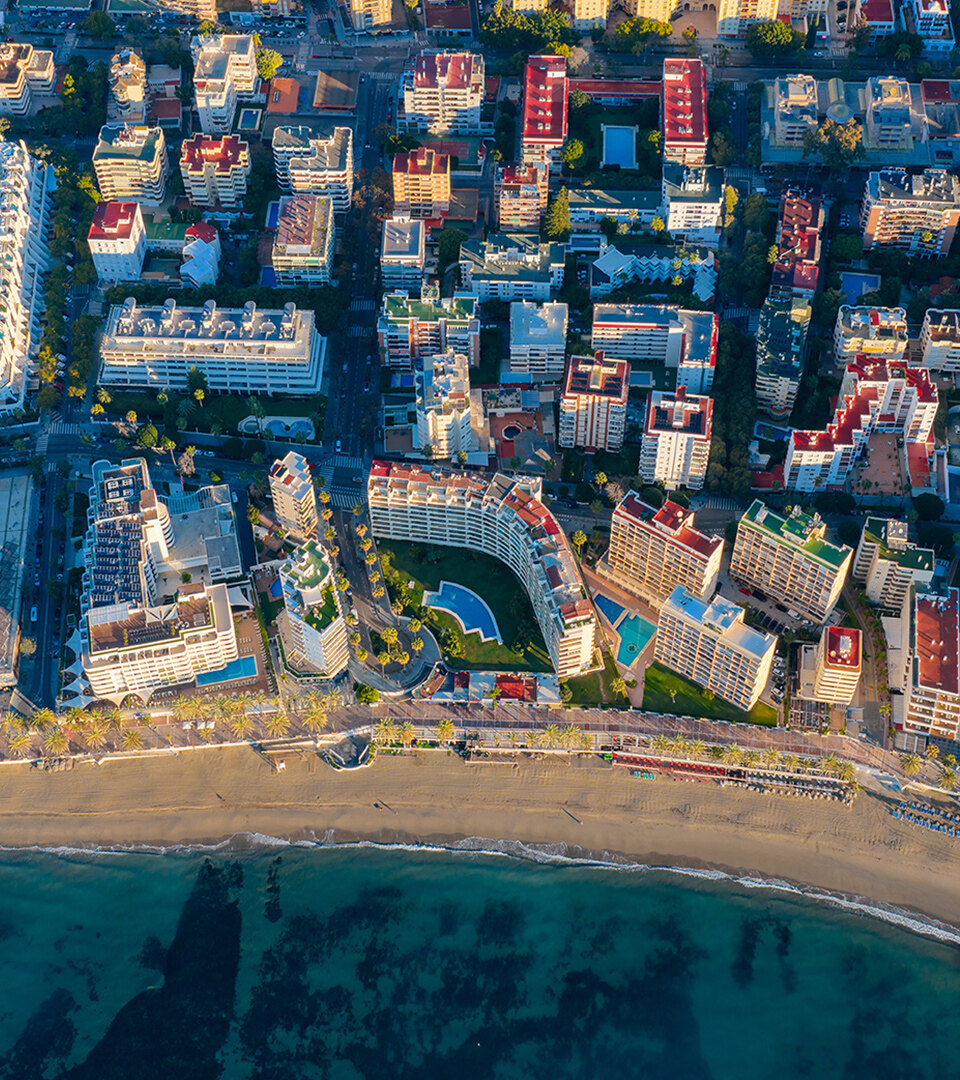
Marbella is updating its planning framework, creating a clearer structure for how land is classified and developed, and improving visibility on what can be built and how areas may evolve.
Marbella’s new planning model is based on regional legislation, (LISTA) Ley 7/2021 de Impulso para la Sostenibilidad del Territorio de Andalucía, which translates to the Law for the Promotion of Territorial Sustainability in Andalusia.
This law replaces the previous single-plan system with two separate documents.
The PGOM (Plan General de Ordenación Municipal) is the general municipal development plan which sets the overall direction for the municipality. It defines land classification, growth areas, infrastructure and environmental protections, with a stronger focus on sustainable development and long-term land use, reflecting broader shifts in how urban growth is being managed across Spain.
The POU (Plan de Ordenación Urbana) is the urban plan, which applies these rules at a local level. It determines what can be built on specific plots, including density, height limits and permitted uses.
For buyers, the POU ultimately determines what can be built around a property.

As of 2026, Marbella’s PGOM has received approval from the Junta de Andalucía and is awaiting final approval by the town hall.
Until that approval is completed and officially published, the current planning framework which is largely based on the 1986 system still remains in force.
The POU is expected to follow, with initial approval anticipated during 2026 and definitive approval likely between 2027 and 2028.
Planning status shapes more than the property itself. It affects what may happen nearby and how an area develops over time.
Changes under the new framework can influence:
The new system is designed to bring more clarity to what can and cannot be built. For now, though, any purchase should be based on the existing legal framework.

To properly assess a property and its surrounding context, buyers looking to secure a home in Marbella should:
From Marbella’s planning portal, you can access the new urban planning framework.
We can help you navigate the buying process, ensuring that all key aspects, from legal and planning considerations to the wider context of the property, are clearly understood before making a decision.
For a deeper dive into the process of acquiring property in Marbella, our Buyers Guide provides an extensive expert analysis.
Subscribe to our newsletter for engaging articles, exclusive content, and the latest updates.
The PGOM sets the overall planning strategy for Marbella, including land classification and growth areas. The POU defines the detailed rules at a local level, including what can be built on specific plots.
Yes, it’s always better to be informed. While purchases are still based on the current legal framework, understanding how the proposed plan may affect nearby plots and future development will help in determining future positioning.
It can affect how surrounding areas are developed in the future, including density, permitted uses and buildability. However, it does not automatically change the legal status of existing properties.
At a minimum, confirm the property’s planning classification through a planning certificate (cédula urbanística), verify that any building and first occupation licences are valid, and check that the property matches both the Land Registry and cadastre (catastro) records. It is also important to understand how the proposed PGOM may affect nearby plots, particularly in terms of future buildability and density.
The proposed framework is available through Marbella’s official planning portal, where users can consult the latest urban planning information published by the Town Hall.

A visionary in PR and real estate, shaping Marbella’s success and legacy.

El Ancon Sierra, Marbella Golden Mile
A rare opportunity to acquire a four-bedroom villa in one of the most exclusive and tightly held gated communities on Marbella’s prestigious Golden Mile. Located within the sought-after El Ancon Sierra I, II, III urbanisation,...
€1,990,000
La Cerquilla, Nueva Andalucia
Located next to the exclusive enclave of La Cerquilla, this exceptional newly built villa for sale is a masterclass in contemporary luxury.A stunning double-height entrance welcomes you, creating an immediate sense of grandeur, flooding the...
€4,995,000
Los Monteros Palm Beach, Marbella East
Palm Beach 20 is a stunning fully renovated residence, a true design gem signed by Cozy Modern Homes, set within the exclusive gated community of Palm Beach, one of the most sought-after residential communities in...
€2,450,000