Like what you read?
Subscribe to our newsletter for engaging articles, exclusive content, and the latest updates.
A look back at the vision behind Puerto Banús and Nueva Andalucía, through Chris Clover’s early memories of José Banús and Panorama’s first years in Marbella.
· 5 min. read
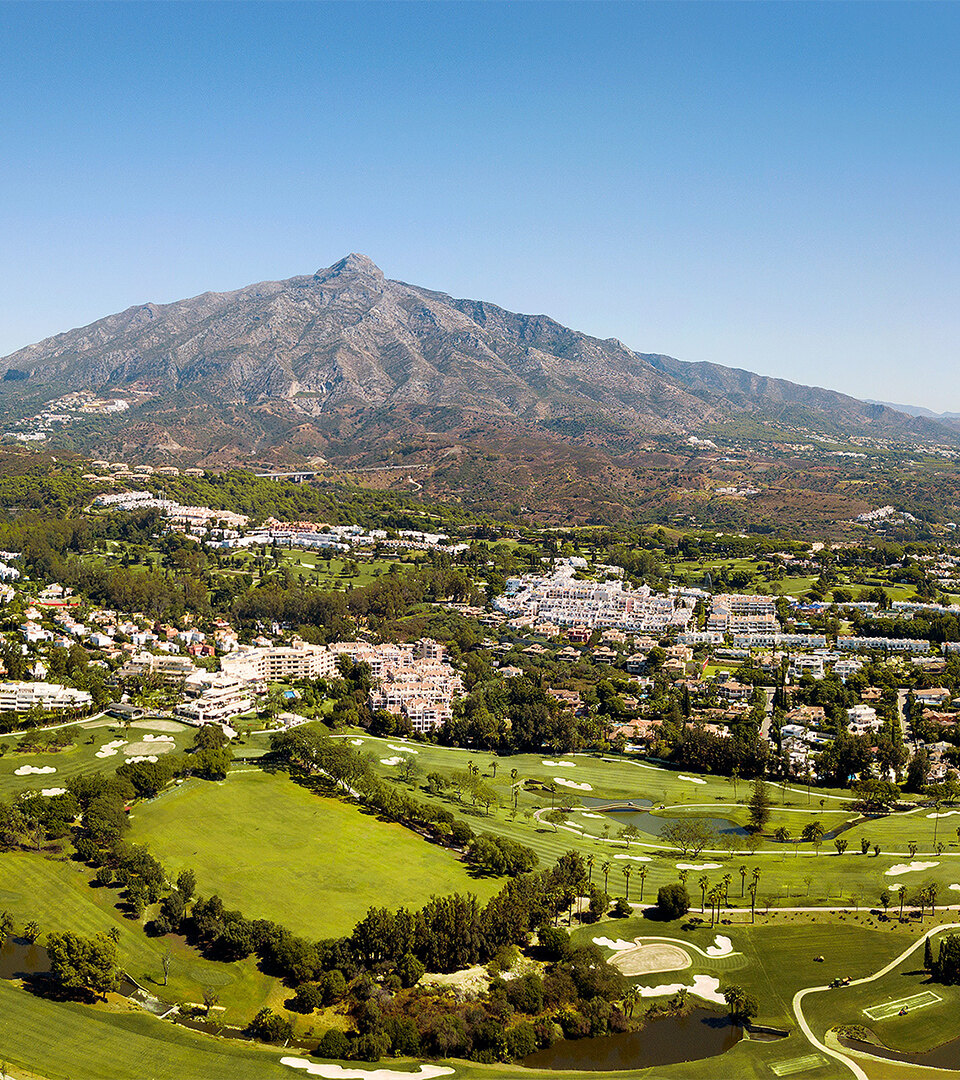
Nueva Andalucía and Puerto Banús are two of Marbella’s most recognised addresses: one defined by villas, golf courses and established residential communities; the other by its marina, boutiques, restaurants and enduring international pull.
But in 1968, the picture was very different.
Panorama was already selling property in the developing area before opening its first Marbella office in early 1970. For Christopher Clover, that early connection is part of a much larger story: the story of José Banús, the developer whose ambition changed the map of western Marbella.

In 1962, José Banús bought several square kilometres of land west of Marbella, including territory that would later form part of Puerto Banús, Nueva Andalucía and Aloha. At the time, the area between Marbella and the future marina was largely undeveloped. The Marbella Club was already established, but there was little else along what is now one of the coast’s best-known stretches.
Banús had already built a major career in construction, including large-scale housing developments in Madrid and other Spanish cities. He understood the scale required to create an entirely new destination, rather than simply building individual homes or a single hotel.
As Chris Clover recalls, his plans were not always met with enthusiasm.
“People called him crazy. Publicly. They denounced him as being crazy and stupid. But he had really tremendous vision.”
Christopher Clover
It is difficult to imagine now, looking at the marina and the residential areas that surround it. Yet Banús was proposing something far beyond the Marbella of the early 1960s: a complete new urbanisation, a marina, golf, residential communities and the infrastructure to connect it all.

José Banús’s original purchase included not only the land that would become Puerto Banús and Nueva Andalucía, but also what is now Aloha: Aloha Golf and the residential developments around it.
That breadth helps explain the logic behind the project. Nueva Andalucía was not conceived as a collection of disconnected urbanisations. It was planned as a much wider residential destination, with golf, services, homes and the marina all forming part of one long-term vision.
Banús also made a bold practical decision. Rather than installing infrastructure gradually, in phases, he attempted to complete the principal infrastructure for the wider development at the same time. This placed substantial financial pressure on the project before the end of the decade.
Chris remembers that the project then faced financial difficulty. The bank stepped in, taking over the land that would later become Aloha and providing the funding needed to complete the wider infrastructure.
That detail is important because it shows how close the area’s history was to taking a different path. The Nueva Andalucía known today was never inevitable. It came from a large, expensive and high-risk development vision that had to survive its own early pressures.

Panorama’s relationship with the area began before its first Marbella office opened in 1970.
By 1968, Panorama was already selling property in Nueva Andalucía and Puerto Banús. Once the Marbella office was established, the company became one of the earliest international agencies active in the area. In the early 1970s, Panorama sold around 120 new properties built by Banús, including apartments, townhouses and villas.
Discover the luxury properties for sale in Nueva Andalucía, Marbella.
For Panorama, this was more than simply being present in a growing market. It meant helping introduce early international buyers to an area that was still becoming what it is today.
The buyers arriving then were not choosing an established Golf Valley or a globally recognised marina. They were buying into an idea: that Marbella could become a year-round international residential destination, and that this previously undeveloped land west of town could play a central role in that future.
Read more about how Panorama began in Marbella in the 1970's.

Chris Clover met José Banús on three occasions during those early years.
He remembers him as “a wonderful guy — very rough, ready”: direct, practical and unmistakably shaped by a career in large-scale construction. It is a personal memory, but it fits the scale of the project Banús undertook in Marbella.
The official archival record shows just how quickly the marina moved from proposal to reality. Planning and concession files date from 1964 to 1966; construction was authorised in 1967; and by 1970, official regulations were in place for Puerto José Banús.
Within a relatively short period, the land beyond the Marbella Club had become the setting for one of the Mediterranean’s best-known marinas, and a residential area that would continue to grow around it for decades.
Subscribe to our newsletter for engaging articles, exclusive content, and the latest updates.

Puerto Banús has changed many times since those early years. Its identity, ownership, commercial offering and public image have all evolved. Nueva Andalucía, meanwhile, has grown into one of Marbella’s most established residential areas, with its own distinct neighbourhoods, golf courses and buyer profiles.
Yet the original idea is still visible.
The marina remains at the centre of the area. The roads, golf courses and residential communities surrounding it reflect the scale of Banús’s original ambition. And Panorama’s connection to the area still reaches back to a point before the first Marbella office opened its doors.
“Marbella evolves, and what more exciting place is there to live?”
Christopher Clover
Watch a clip from the interview with Christopher Clover on Marbella’s early days:

Find out everything you need to know about living in Puerto Banús.

An essential guide if you’re planning to live in Nueva Andalucía.

Ensures smooth operations at Panorama with unmatched organisation and enthusiasm.