Like what you read?
Subscribe to our newsletter for engaging articles, exclusive content, and the latest updates.
Discover Marbella’s best places and experiences, from the Old Town and beaches to Puerto Banús and La Concha.
· 6 min. read
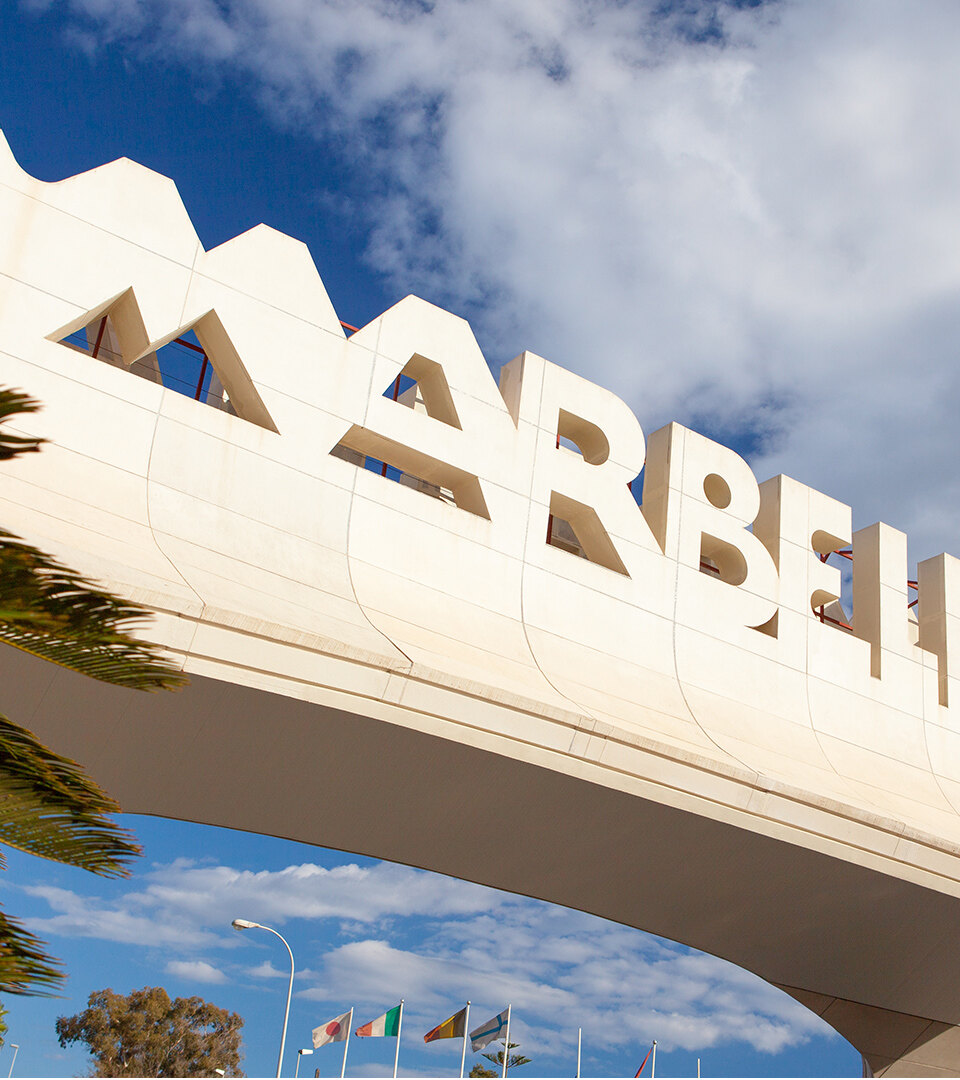
Marbella may be best known for its luxury Mediterranean lifestyle, but that is only one part of its appeal. Beyond the beach clubs and fine dining lies a city of historic streets, coastal landscapes, outdoor pursuits and experiences shaped by the sea.

Marbella Old Town is centred around Plaza de los Naranjos, a historic square framed by the 16th-century Town Hall, the Casa del Corregidor, once associated with the royal official who governed the town, and the Ermita de Santiago, Marbella’s oldest Christian church.
From here, narrow pedestrian streets lead past white façades, flower-filled balconies, boutiques and small squares. Other landmarks include the Church of Nuestra Señora de la Encarnación and the surviving walls of Marbella Castle, built during the city’s Islamic period.
The Old Town is particularly atmospheric in the evening, when its terraces fill and its narrow streets come alive. Catch an intimate flamenco performance and enjoy authentic Andalusian cuisine in traditional taverns, rooftop restaurants, secluded courtyards and hidden terraces tucked behind the main streets.
It is equally charming in the morning, when the sunlight and slower pace reveal a quieter side of the historic centre. Plaza de los Naranjos is the perfect place to linger over churros con chocolate, surrounding the vibrant flower beds and sitting beneath the orange trees.

Discover the collection of 10 bronze sculptures by Salvador Dalí along Avenida del Mar, the pedestrian avenue linking Marbella Old Town with the seafront. Set among fountains, palm trees and landscaped gardens, the open-air gallery brings one of Spain’s most famous artists into the heart of the city.
The avenue leads directly to Marbella’s beach front promenade, known as the Paseo Marítimo, making it an easy stop between the historic centre and the beach.

The best-known stretch of Marbella’s Paseo Marítimo runs for around six kilometres from the central marina to Puerto Banús, taking approximately 90 minutes to walk without stops. It passes El Faro, La Fontanilla and Casablanca beaches before continuing along the Golden Mile, past the Marbella Club and Puente Romano.
Just before Puerto Banús, the route crosses the distinctive red footbridge over the Río Verde. Measuring 70 metres, it has become one of the promenade’s most recognisable landmarks.
Lined with chiringuitos, cafés, beach clubs and seafront hotels, the promenade is popular for morning walks, running and cycling, or simply choosing a shorter section for lunch or sunset beside the Mediterranean.
Take a look at our Marbella Golden Mile area guide.
Subscribe to our newsletter for engaging articles, exclusive content, and the latest updates.

Marbella has 24 pristine beaches spread across approximately 27 kilometres of coastline, ranging from busy central beaches to quieter stretches in Marbella East and San Pedro Alcántara.
La Venus, El Faro and La Fontanilla are easily reached from Marbella town centre. Casablanca and Nagüeles sit along the Golden Mile, while El Alicate, Las Chapas and Cabopino are among the best-known beaches to the east.
The city’s beaches are not only for sunbathing. They are popular for morning swims, family afternoons, evening walks and long lunches at traditional chiringuitos beside the sand.
You might also be interested in: Blue Flag beaches in Málaga.

At the eastern edge of Marbella, Cabopino brings together a sandy beach, a small marina and the protected Dunas de Artola. Declared a Natural Monument in 2003, the dunes cover just over 19 hectares and preserve one of the most important remaining sections of Málaga province’s original coastal dune system.
Standing above the dunes is Torre Ladrones, a three-storey watchtower whose origins are attributed to Marbella’s Nasrid period, before the city passed to the Catholic Monarchs in 1485. It was later incorporated into the coastal defence network developed from the late 15th century, with fires lit from its rooftop to warn of approaching enemy ships.
Wooden walkways cross the landscape behind the beach, making it easy to combine the dunes and tower with swimming, lunch beside the marina or a family day on the coast.

Puerto Banús remains one of Marbella’s most recognisable attractions. Its marina is lined with superyachts, designer boutiques, restaurants and terraces, set among white, low-rise buildings with La Concha rising in the background.
Walk along the quays, browse the boutiques, stop for lunch overlooking the marina or take to the Mediterranean on a private yacht charter or sunset cruise.
Beaches lie on either side of the port, while the Paseo Marítimo connects Puerto Banús with the Golden Mile, Marbella town and San Pedro Alcántara.
Further reading: Living in Puerto Banús: The Complete Area & Property Guide.

The range of water sports available in Marbella extends from paddleboarding, kayaking and sailing to jet skiing, parasailing, wakeboarding and diving. Newer sports such as e-foiling and electric jetboarding have also brought a more futuristic dimension to Marbella’s water-sports scene, allowing riders to glide above the surface of the Mediterranean.
Thanks to the frequently calm conditions close to shore, paddleboarding is particularly popular and accessible from many of the city’s beaches.
Boat trips and private charters depart from Puerto Banús and Marbella’s central marina.
Dolphin-watching trips, site-seeing ferry trips, relaxed coastal sails and sunset cruises are popular, while longer excursions towards the Strait of Gibraltar offer the chance for some serious whale-watching, including fin whales migrating between the Mediterranean and Atlantic.
You might be interested in: Luxury on the water: Marbella’s most exclusive yacht experiences.

Named Europe’s Best Sport Destination for 2026, Marbella combines a year-round outdoor climate with an exceptional choice of golf courses, racquet clubs and sporting facilities.
Marbella alone has 19 golf courses, the highest number of any municipality in Spain. Across the wider Costa del Sol, more than 70 courses have earned the region its nickname, the Costa del Golf. Several of Marbella’s most renowned clubs are concentrated around Nueva Andalucía, an area widely known as the Golf Valley.
Explore our: Top 10 golf courses in Marbella.
Tennis and padel are equally embedded in the local lifestyle, with professional coaching, established clubs and courts throughout the city. Puente Romano Tennis Club is one of Marbella’s best-known sporting venues, while the abundance of padel clubs reflects the sport’s enormous popularity in Spain.

La Concha is Marbella’s most recognisable mountain peak, while nearby Juanar is a wooded area above Ojén and the starting point for its best-known hiking route.
You might also be interested in: Best spring hikes near Marbella: mountains, wildflowers & waterfalls.
From Juanar, the PR-A 168 trail climbs through woodland before continuing along the exposed ridge to the summit. The official route is around 7 kilometres each way and takes approximately 3.5 hours each way. It is considered a medium-to-difficult route, with steep and rocky sections that require suitable footwear and care.
Juanar offers gentler alternatives, including walks through the olive groves and routes towards nearby viewpoints. On clear days, the higher trails reveal the entire coastline, Gibraltar and even the mountains of North Africa.
Read more about the Marbella’s unique geography is a lifestyle advantage.
Marbella’s main attractions include the Old Town and Plaza de los Naranjos, Avenida del Mar, Puerto Banús, the Paseo Marítimo, its beaches, La Concha and the Artola dunes.
Popular activities include swimming, paddleboarding, kayaking, boat trips, golf, tennis, padel, cycling along the coast, hiking in Sierra Blanca and exploring the city’s historic sites.
Yes. Named Europe’s Best Sport Destination for 2026, Marbella offers golf, tennis, padel, water sports, hiking, cycling and year-round outdoor facilities.
Cabopino beach, the Artola dunes, Aventura Amazonia, boat trips, water sports and the Paseo Marítimo are among Marbella’s best family-friendly attractions.
A good one-day itinerary begins in Marbella Old Town, continues through Avenida del Mar to the beach and Paseo Marítimo, and finishes in Puerto Banús or with an evening beside the sea.

Ensures smooth operations at Panorama with unmatched organisation and enthusiasm.